Why Do Dental Implants Fail? Symptoms, Causes and Treatment
Dental implants are designed to replace missing teeth with stable, long-term restorations. Although implant treatment has high success rates, complications can sometimes occur during healing or after the final teeth have been fitted.
Understanding why dental implants fail can help patients recognise warning signs, seek professional advice and take steps to protect their oral health.
A failed dental implant does not always mean that the implant needs to be removed. In some situations, the problem may involve the surrounding gums, the implant-supported crown or the tissues supporting the implant.
In this guide, we explain the common causes of dental implant failure, the symptoms to look out for, available treatment options and ways to reduce the risk of complications.
What Does Dental Implant Failure Mean?
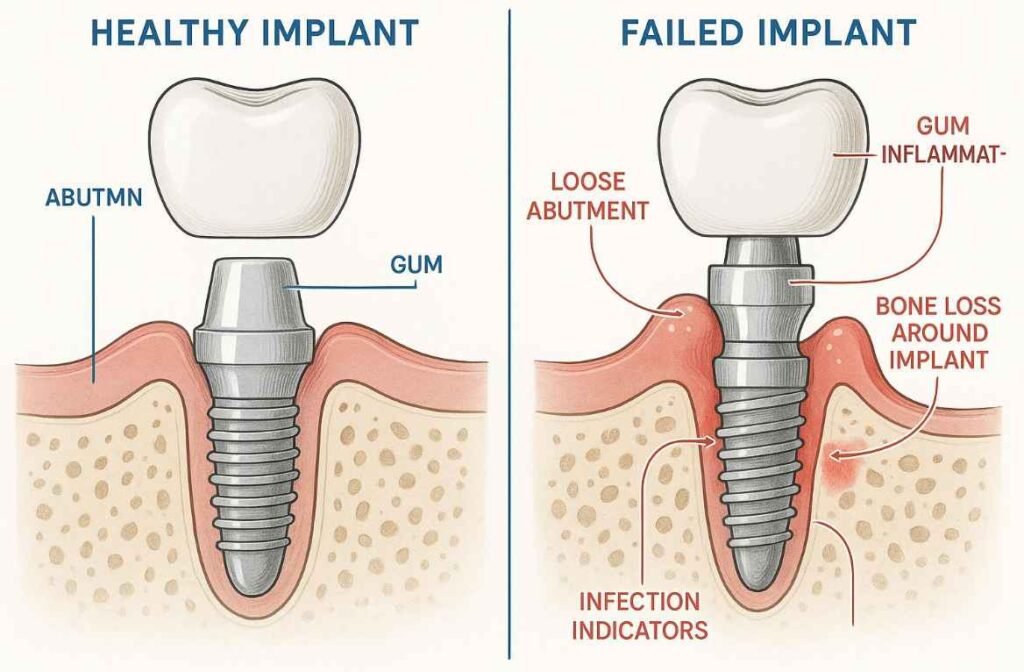
Dental implant failure occurs when an implant does not achieve or maintain the stability and healthy tissue support needed to function successfully.
There are two broad stages when problems may develop:
Early implant failure
This happens during the initial healing period, before the implant has successfully integrated with the surrounding jawbone.
Late implant failure
This occurs after the implant has initially integrated and may have been functioning for months or years.
Late problems can involve bone loss, infection, excessive mechanical forces or damage to the implant-supported restoration.
It is important to distinguish true implant failure from problems affecting the crown, bridge or surrounding gum tissue.
What Are the Symptoms of a Failed Dental Implant?
Not every complication produces obvious symptoms. Some problems are identified during routine dental examinations before the patient notices anything unusual.
However, the following signs should be taken seriously.
1. Persistent or Increasing Pain
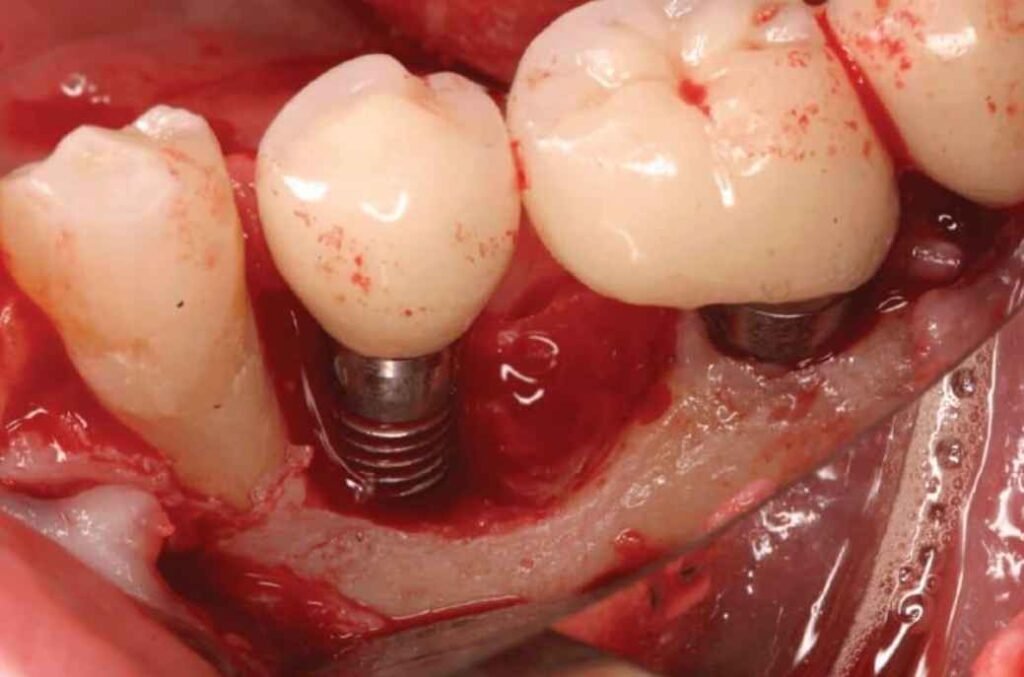
Some discomfort is expected after implant surgery, particularly during the first few days.
However, pain that becomes worse instead of improving, or pain that develops after a period of comfortable healing, should be assessed.
Possible causes include infection, inflammation, excessive loading or problems involving the surrounding structures.
2. Implant Movement or Looseness
A dental implant should become stable within the jawbone.
If the implant itself feels loose or moves, this may indicate a serious problem with integration or supporting bone.
Do not repeatedly touch, push or test the implant yourself.
A loose crown is not necessarily the same as a loose implant. The dentist needs to identify which component is moving.
3. Swollen or Bleeding Gums
Persistent redness, swelling or bleeding around an implant may indicate inflammation.
One possible condition is peri-implant mucositis, which affects the soft tissues surrounding the implant.
If inflammation progresses and is associated with supporting bone loss, it may develop into peri-implantitis.
4. Pus or Unusual Discharge
Discharge around an implant can be a sign of infection.
If you notice pus, an unpleasant taste or swelling accompanied by discomfort, contact your dentist promptly.
5. Difficulty Chewing
Pain or discomfort when chewing may indicate that the implant or restoration needs assessment.
Possible causes include:
- An uneven bite.
- A loose crown.
- Excessive biting forces.
- Inflammation around the implant.
- Problems with implant stability.
6. Gum Recession or Visible Implant Components
Changes in gum position may expose parts of the implant or restoration that were previously covered.
This does not automatically mean the implant has failed, but it may indicate a need for professional assessment.
What Are the Main Causes of Dental Implant Failure?
Several biological, mechanical and lifestyle factors can contribute to implant complications.
1. Poor Osseointegration
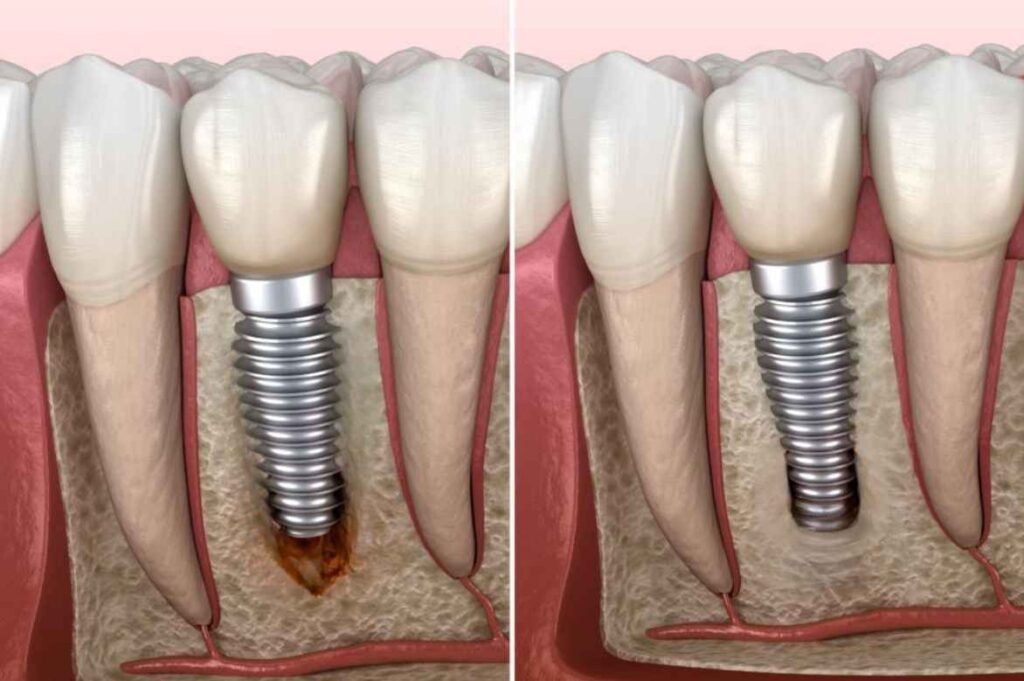
Osseointegration is the process through which bone forms a stable connection with the dental implant.
If this process does not develop adequately, the implant may fail to achieve the stability needed to support a restoration.
Possible contributing factors include:
- Insufficient bone quality or quantity.
- Infection at the surgical site.
- Excessive movement during healing.
- Certain medical conditions.
- Smoking.
- Premature loading in unsuitable cases.
2. Peri-Implantitis
Peri-implantitis is an inflammatory condition affecting the tissues around a dental implant and is associated with progressive supporting bone loss.
It may develop when bacterial biofilm accumulates around the implant.
Risk factors can include:
- Inadequate oral hygiene.
- Previous periodontal disease.
- Smoking.
- Poorly maintained restorations.
- Irregular dental check-ups.
Early diagnosis is important because advanced bone loss can compromise implant stability.
3. Smoking
Smoking can negatively affect oral healing and is associated with a higher risk of complications around dental implants.
Tobacco use may affect blood supply, tissue healing and the body’s response to infection.
Patients should discuss smoking with their dentist before treatment and follow professional advice about stopping before and after surgery.
4. Insufficient Jawbone Support
Dental implants require suitable bone support.
Patients who have experienced long-term tooth loss, advanced gum disease or previous trauma may have reduced bone volume.
In some cases, bone grafting may be recommended before or during implant placement.
If bone support is inadequate, the implant may not achieve the required stability.
5. Poor Oral Hygiene
Dental implants cannot develop tooth decay, but the surrounding gum and bone can still become inflamed.
Plaque accumulation around an implant may contribute to peri-implant diseases.
Daily cleaning and professional maintenance are essential.
6. Excessive Bite Forces
Dental implants can be affected by excessive chewing forces.
Patients who grind or clench their teeth may place additional pressure on implants and restorations.
Possible consequences include:
- Loose screws.
- Crown damage.
- Ceramic fractures.
- Mechanical complications.
- Overloading of the implant.
Your dentist may recommend bite adjustments or a protective night guard when appropriate.
7. Incorrect Implant Positioning
Implant placement requires careful planning.
If an implant is positioned poorly, it may create difficulties with cleaning, restoration design, bite alignment or surrounding tissue health.
This is one reason why proper diagnostic imaging and treatment planning are important before surgery.
8. Poorly Fitted Restorations
An implant may remain integrated with the jawbone while its crown or bridge develops problems.
For example:
- A crown may become loose.
- A screw may loosen.
- Ceramic material may chip.
- The bite may become uncomfortable.
- The restoration may make cleaning difficult.
These problems do not necessarily mean the implant itself has failed.
A dentist should assess the implant and restoration separately.
Early vs Late Dental Implant Failure
Understanding when the problem develops can help explain the possible causes.
| Feature | Early failure | Late failure |
|---|---|---|
| Timing | During initial healing | After integration |
| Common concern | Failure of osseointegration | Bone loss or mechanical complications |
| Possible symptoms | Pain, mobility or persistent inflammation | Bleeding, swelling, discomfort or looseness |
| Assessment | Healing and implant stability | Bone, gum health and restoration |
| Treatment | Depends on the cause | Depends on the extent of damage |
These are general categories. The timing alone cannot establish the diagnosis.
How Is Dental Implant Failure Diagnosed?
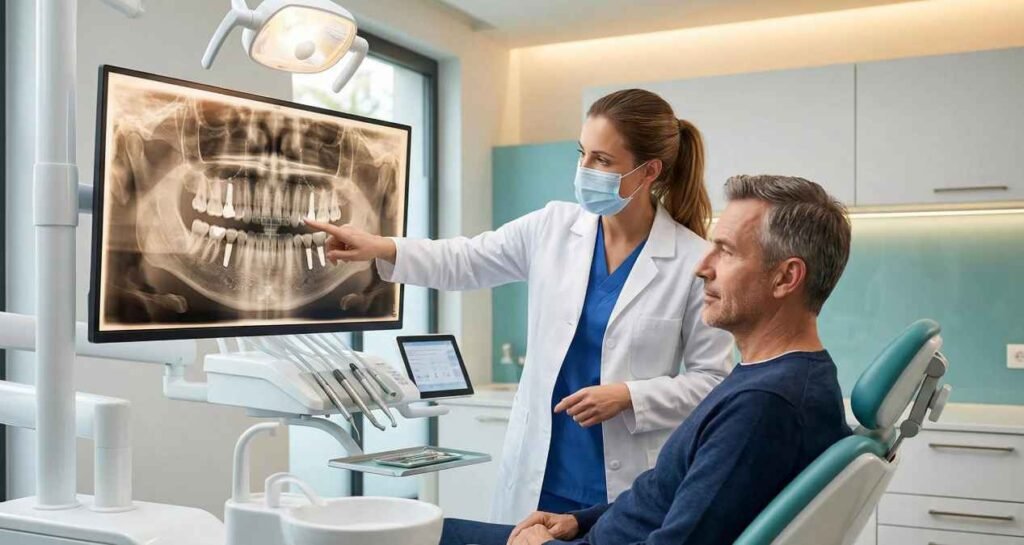
A dentist or implant specialist will usually combine a clinical examination with appropriate imaging.
The assessment may include:
1. Clinical examination
The dentist checks the gums, surrounding tissues, restoration and implant area.
2. Implant stability assessment
The dentist evaluates whether the implant is stable and whether movement is present.
3. Dental X-rays
Radiographs can help assess the bone around the implant and identify changes over time.
4. CBCT imaging
A three-dimensional scan may be recommended when more detailed information about bone structures is required.
5. Bite assessment
The dentist checks whether excessive forces or an uneven bite may be contributing to the problem.
A diagnosis should not be based on symptoms alone.
Can a Failed Dental Implant Be Saved?
In some situations, yes. The treatment depends on the cause and severity of the complication.
Treating Early Gum Inflammation
If the problem is limited to inflammation of the soft tissues, professional cleaning and improved oral hygiene may help.
The dentist may also recommend more frequent maintenance appointments.
Treating Peri-Implantitis
Treatment options depend on the extent of inflammation and bone loss.
They may include:
- Professional cleaning.
- Removal of bacterial deposits.
- Improved home-care techniques.
- Surgical treatment in selected cases.
- Ongoing periodontal maintenance.
No single treatment is suitable for every patient.
Repairing a Loose Crown
If the implant is stable but the crown or connecting screw is loose, the dentist may be able to repair or replace the affected component.
This is different from a failed implant.
Removing a Failed Implant
If an implant has lost stability or has severe supporting bone damage, removal may be necessary.
The dentist will assess the area and discuss possible future treatment.
Can You Replace a Failed Dental Implant?
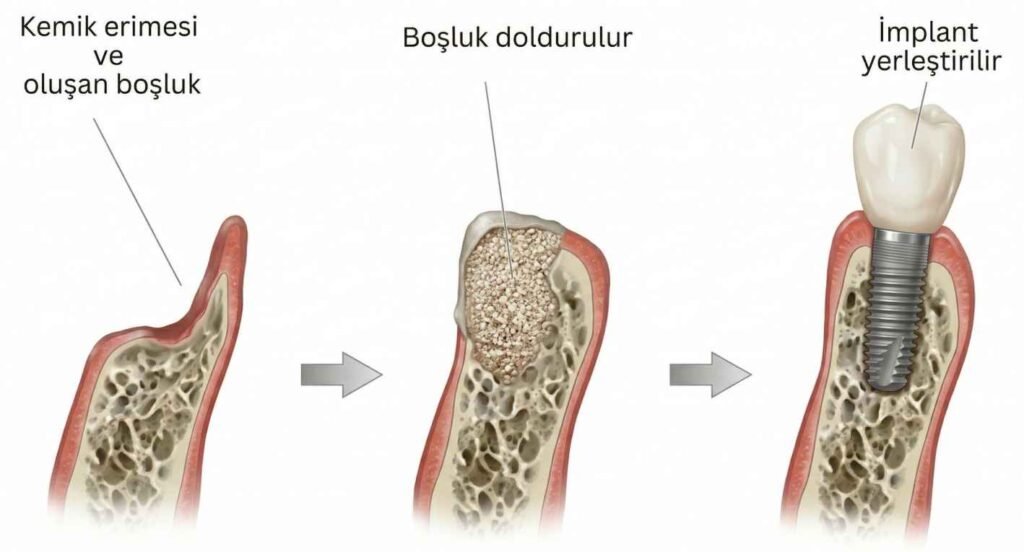
In some cases, another implant can be placed after a failed implant has been removed.
However, replacement is not always immediate.
The dentist may need to:
- Remove the failed implant.
- Treat any infection or inflammation.
- Allow the tissues to heal.
- Assess the remaining bone.
- Consider bone grafting if required.
- Determine whether another implant is suitable.
The decision depends on the reason for failure, the available bone and the patient’s overall oral health.
Are Dental Implants in Turkey More Likely to Fail?
The country where an implant is placed does not, by itself, determine whether it will succeed or fail.
Clinical outcomes depend on several factors, including:
- The patient’s suitability for treatment.
- The dentist’s training and experience.
- Diagnostic assessment.
- Implant positioning.
- Surgical and restorative planning.
- Quality of aftercare.
- Long-term maintenance.
Patients considering treatment abroad should carefully evaluate the dentist, clinic, proposed implant system and follow-up arrangements.
It is also important to know who will provide support if a complication develops after returning home.
How Can You Reduce the Risk of Dental Implant Failure?
Although complications cannot always be prevented, several measures can help support long-term implant health.
- Choose a suitably qualified dental professional.
- Complete the recommended examinations before surgery.
- Share your full medical and dental history.
- Follow post-operative instructions.
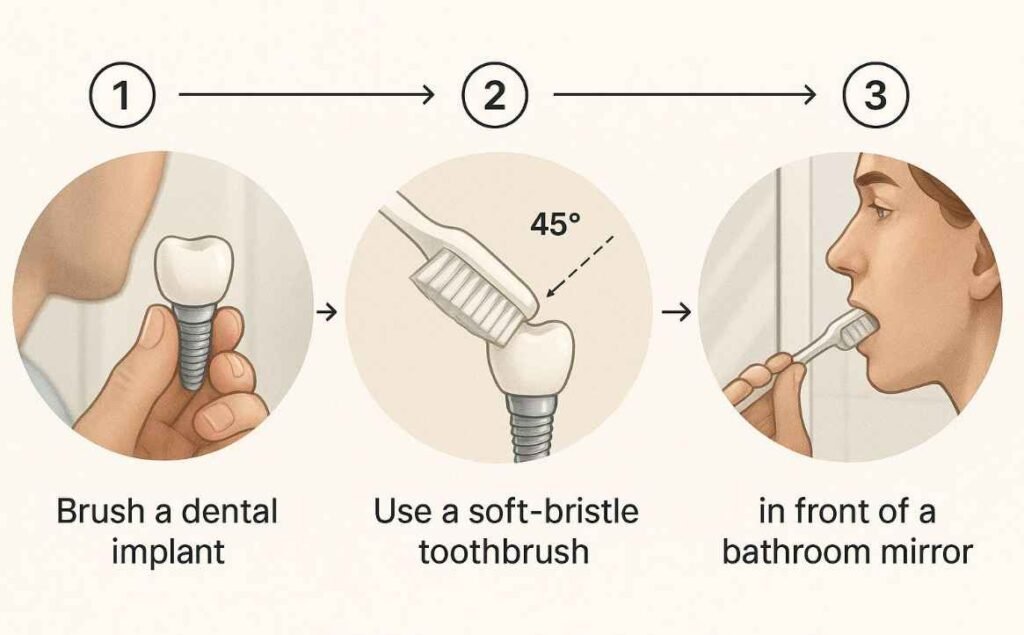
- Maintain good oral hygiene.
- Avoid smoking.
- Attend regular dental check-ups.
- Manage teeth grinding if necessary.
- Report unusual symptoms promptly.
- Follow the recommended implant maintenance schedule.
Long-term implant care is a shared responsibility between the patient and dental team.
What If Your Dental Implant Fails After Treatment in Turkey?
Patients who travel to Turkey for dental treatment should understand the follow-up arrangements before leaving.
If you experience problems after returning home:
- Contact the clinic that performed the treatment.
- Describe your symptoms and when they began.
- Request copies of your implant records and treatment details.
- Arrange an examination with a local dentist when needed.
- Seek urgent assessment if you have severe pain, spreading swelling, fever or signs of infection.
Ask the original clinic for:
- Implant manufacturer and model.
- Implant placement details.
- Dental X-rays and scans.
- Restoration specifications.
- Surgical notes.
- Details of any bone grafting.
- Written aftercare instructions.
These records can help another dentist understand your treatment history.
Frequently Asked Questions
How do I know if my dental implant is failing?
Possible warning signs include increasing pain, persistent swelling, bleeding, pus, implant movement and changes in the surrounding gum tissue. A dental examination is necessary to establish the cause.
Can a dental implant fail after 10 years?
Yes. Although implants can function for many years, late complications can occur, including peri-implantitis, bone loss and mechanical problems.
Is a loose dental implant always a failure?
Movement of the implant itself is concerning and requires prompt assessment. However, a loose crown or screw may be a separate mechanical problem.
Can an infected dental implant be saved?
Some cases can be treated without removing the implant, particularly when the condition is identified early. Advanced infection and bone loss may require more extensive treatment.
Does smoking cause dental implant failure?
Smoking is an important risk factor associated with impaired healing and increased implant complications. Patients should discuss their smoking habits with their dentist.
Can a failed dental implant be replaced immediately?
Not always. The area may need treatment and healing before another implant can be considered.
Are dental implant failures painful?
Not necessarily. Some complications cause pain, but others may develop with few noticeable symptoms. Regular dental reviews are important.
Final Thoughts: Understanding Dental Implant Failure
Dental implants are designed to provide long-term tooth replacement, but complications can occur during healing or years after treatment.
Pain, swelling, bleeding, discharge and implant movement should never be ignored. Early professional assessment can help identify the problem and determine whether the implant can be maintained, repaired or needs replacement.
If you are considering dental implants in Turkey, choose a treatment plan that includes proper diagnosis, transparent clinical information and long-term aftercare.
Concerned about a dental implant or considering treatment? Contact our dental team to discuss your condition and arrange an individual assessment.